

Photographing Flowers: Behind the Lens with Mark Overmars (with Free eBook)
- June 15, 2026
- 3,028 Views
Posted by Patrick Smith
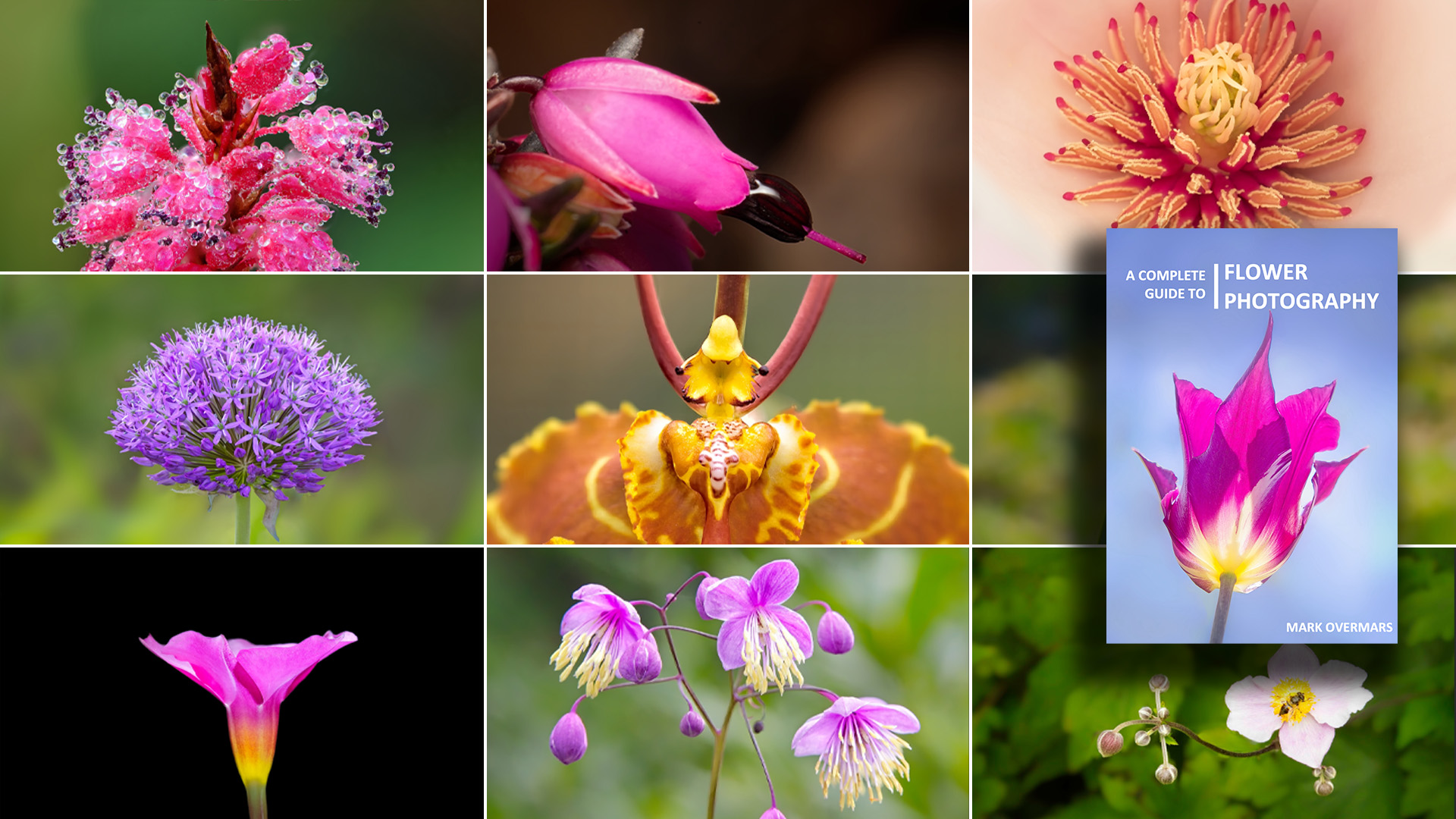
After two years deep in insect photography, Mark Overmars pointed his Canon R7 at a new subject: flowers. In his third free ebook, Photographing Flowers, he shares what changed when he traded fast-moving insects for subjects that hold still, and why that change turned out to be harder than it sounds.
In this post, Mark talks about the moment that revealed how much there was to learn about flower photography, his approach to editing every image in the book with ON1 Photo RAW, and the one thing he wants beginners to focus on before anything else. You can also download the free ebook Photographing Flowers, for free, packed with techniques, editing breakdowns, and 246 pages of images from his garden visits across the Netherlands.
Why Switch from Insects to Flowers?
Mark spent 2022 through 2024 photographing insects almost exclusively. The work was rewarding, but it came with a built-in problem: insects don’t wait around.
“You have very little time to take the shot and often the insect is gone before you can take a good photo,” he says. “You are always in a hurry.”
Flowers offered the opposite. They stay put, which gave Mark room to slow down and think through each composition before pressing the shutter. What he didn’t expect was how much that extra time would expose new problems he’d never had to solve before.
The Shot That Changed Everything
Ask Mark when flower photography stopped looking easy, and he points to a single morning.
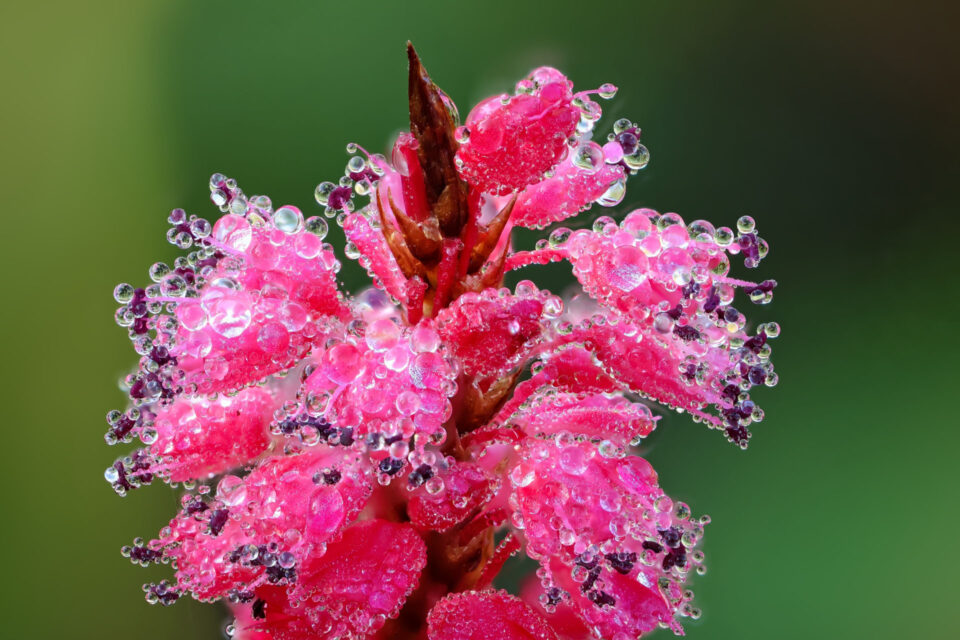
He was out shooting insects when a dew-covered flower caught his eye. He set up for the shot and ran into a wall: no aperture he tried gave him enough depth of field to keep every drop of dew sharp.
“That is one of the challenges of flower photography, dealing with the depth of field,” he explains. The fix was focus stacking, a technique he now walks through in the book using that exact image as the example.
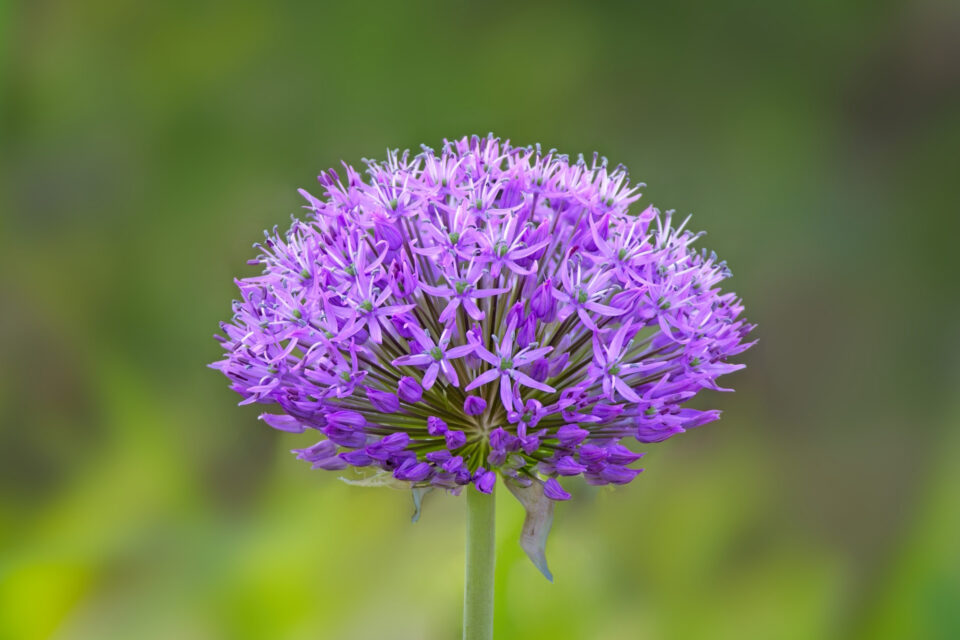
The background turned out to be just as demanding. Mark had already noticed its importance while photographing butterflies, but with flowers the background usually sits much closer to the subject, which makes it far harder to control.
What’s Inside the 246-Page Book
Photographing Flowers runs 246 pages and follows a structure Mark calls fairly standard: equipment, technique, composition, and light, with a dedicated macro chapter because flowers reward attention to detail. A large portion of the book covers editing, which Mark sees as inseparable from the photography itself.
What sets the book apart is the why behind each technique, not just the how. “I believe that when people understand why something is the case, it will be easier to remember,” he says.
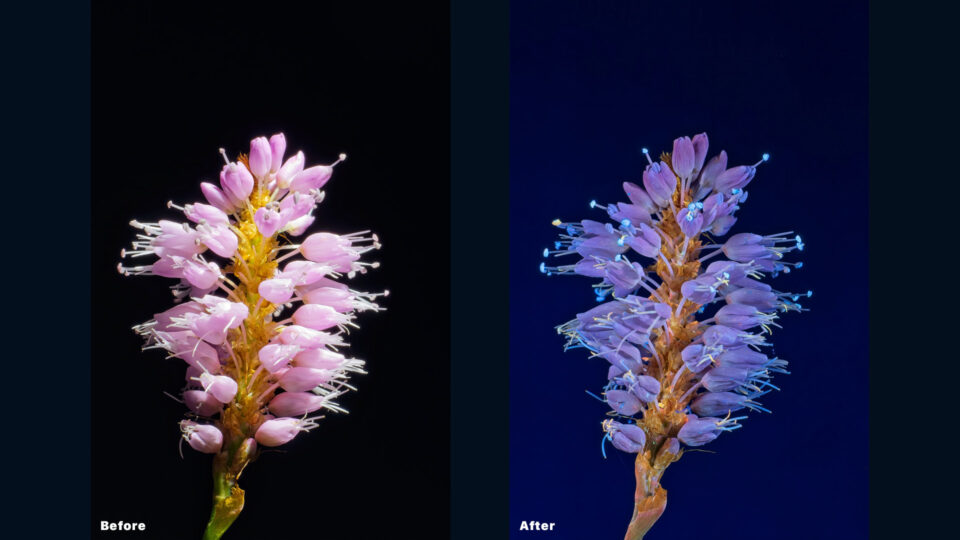
One chapter might surprise readers: UV fluorescence photography. Mark stumbled onto the technique after seeing an online image of a flower lit with UV light. “It turned out to be a lot easier than I thought,” he says, and the response from early readers convinced him it belonged in the book.
Don’t expect chapters on intentional camera movement or multi-flower stills, though. Mark’s approach favors single flowers shown in natural detail over heavily stylized or composite shots.
Gear: Less Than You’d Think
Mark shoots with a Canon R7 and an RF 100mm macro lens, but he’s quick to point out that’s not a requirement.
“You can take great flower shots with any camera and lens, even with mobile phones,” he says. The one limitation with phones is background blur, but for most flower shots, a dedicated macro lens isn’t necessary at all.
Indoors vs. Outdoors: The Wind Problem
A full section of the book covers shooting flowers indoors and in greenhouses, and Mark’s reasoning comes down to one word: wind.
“Wind is the number one enemy of flower photographers,” he says. It throws off focus, ruins composition, and causes motion blur. Indoors, none of that applies. Long exposures become possible without extra light, harsh sunlight and ugly shadows disappear, and Mark can shape his own lighting with backlight or multiple sources. Greenhouses bring their own set of challenges, which he breaks down separately in the book.
Editing Every Image in ON1 Photo RAW
Mark has used ON1 Photo RAW for five years, ever since he picked photography back up seriously and ran an extensive comparison of editing tools before committing to one.
“What I liked about ON1 Photo RAW was that it could do both image organization and editing, that it was only meant for photography, that it had the right balance between ease of use and being in control, and that the structure was logical,” he says. The one-time license over a subscription was a deciding factor, and Mark adds that he prefers supporting a smaller company over the larger players in the space.
Where the Book Connects with ON1 Tools
The editing chapter is one of the longest in the book, covering everything from basic tone adjustments to background separation to creative effects. Mark’s biggest observation: most photographers underuse editing because they don’t realize how much modern tools can do.
“I want to show that editing is easy, takes little time, and can considerably improve your work,” he says. He also points out that knowing what editing can fix changes what he shoots in the first place. If a flower has a distracting element he knows he can remove later, he takes the shot anyway.
Throughout the book, Mark connects specific ON1 Photo RAW tools to specific problems:
- Background separation: Select the background, then reduce vibrancy, lower dynamic contrast, or darken it to push focus onto the flower.
- Local adjustments: Add or remove light selectively to fix uneven lighting from the original shot.
- Standard editing workflow: Mark follows the same process for nearly every image, which he breaks down step by step using two full before-and-after examples in the book.
One of those two examples starts from an already-strong photo, showing how editing can turn good into great. The other starts from a shot Mark calls a near-failure: not enough light reached the flower, and he couldn’t get close enough. He knew both problems were fixable in ON1 Photo RAW before he even pressed the shutter, and the final edit proves it.
From Medium Articles to a Free Ebook
Like his previous two books, Photographing Flowers started as a series of articles on Medium. Reader feedback shaped what made it into the final version.
“When people tell you that they learned new things and liked your image, that motivates you to continue and write more,” Mark says. “Without those comments, I might not have written the book at all.”
And like his earlier books, this one is free. “I find it more important that many people have access to my work than to make some money with it,” he says.
One Thing Beginners Should Watch For
Mark’s advice for someone about to read the book cover to cover: don’t.
“I would not recommend first reading the entire book,” he says. “You will appreciate the content more after you tried to take some flower shots. Read chapter one and go out shooting. After a while, read the rest of the book.”
Once you’re out there, watch the background. Most beginners focus entirely on the flower itself, but the background determines whether the image works. Mark’s rule of thumb: pick a position where the background sits far away and stays uncluttered, often by shooting from a lower angle.
About the Author: Mark Overmars
Mark is a retired computer scientist and amateur nature photographer based in the Netherlands, where he shoots flowers in gardens around Utrecht, including the city’s botanic gardens. After spending 2022 to 2024 focused on insect photography (the subject of his first two free ebooks), he shifted to flowers in 2025 for Photographing Flowers, his third book.
He shoots with a Canon R7 and RF 100mm macro lens, and edits every image in ON1 Photo RAW. You can find more of his work, including his Medium articles, at insectenfotograferen.nl.
Frequently Asked Questions
What is the ebook Photographing Flowers about?
The free ebook by Mark Overmars covers flower photography techniques, from equipment and composition to macro photography, focus stacking, UV fluorescence, and a full editing workflow in ON1 Photo RAW.
Is the ebook really free to download?
Yes. ON1 offers Photographing Flowers as a free download from the ON1 Bookshelf, no purchase required.
What camera gear does Mark Overmars use for flower photography?
Mark shoots with a Canon R7 and an RF 100mm macro lens, but notes that flower photography doesn’t require specialized gear. Most shots, including many in the book, don’t need a macro lens at all.
How did Mark edit the photos in the book?
Mark edited every image in ON1 Photo RAW, using background separation, dynamic contrast, and local adjustments to control light and draw focus to the flower.
What’s the biggest challenge in flower photography?
Depth of field and background control. Flowers often require focus stacking to keep fine details like dew sharp throughout the frame, and because backgrounds sit close to the subject, they need careful handling to avoid distraction.
Why does Mark recommend shooting flowers indoors?
Wind is the biggest obstacle to flower photography outdoors. Shooting indoors or in a controlled setup removes wind entirely, allows for longer exposures, and gives full control over lighting direction and quality.
Please review our privacy policy for information about how we use the data we collect.